Cataloging Interdependent Symbol Networks Across Multilingual Digital Reel Archives
Petra Butler · Aug 22, 2026
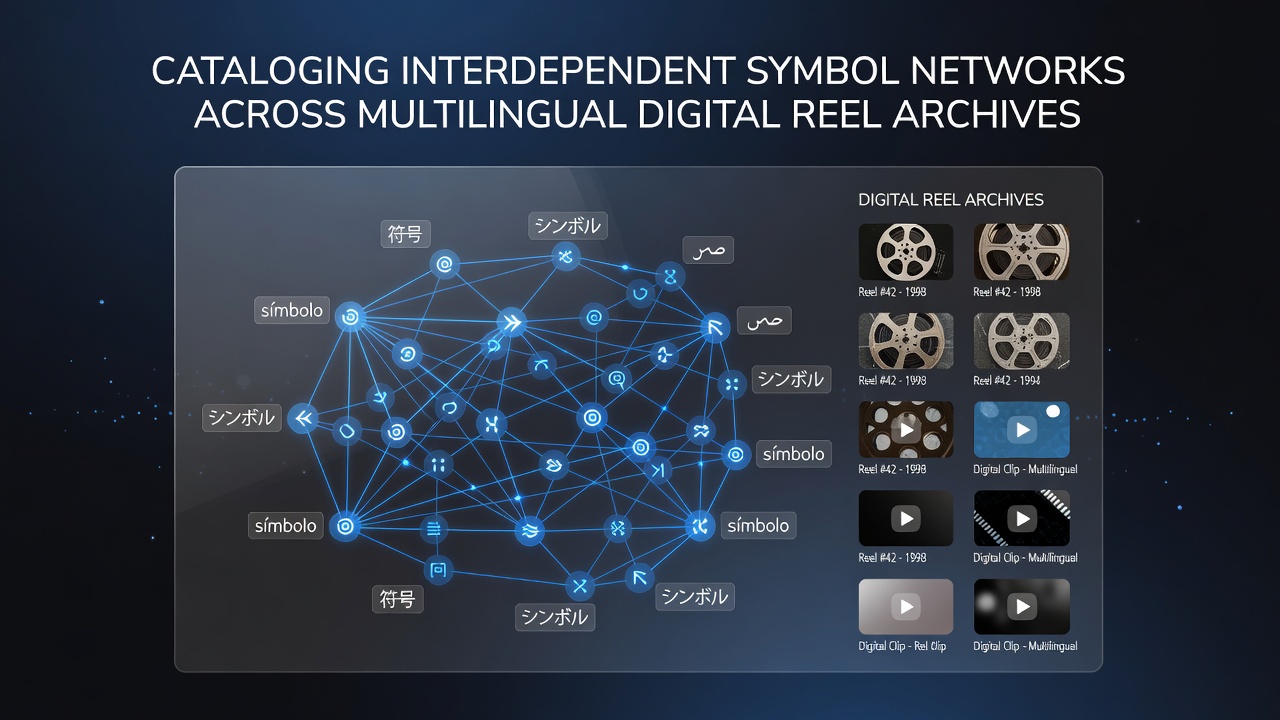
Cataloging Interdependent Symbol Networks Across Multilingual Digital Reel Archives
Digital reel archives have expanded rapidly across global gaming platforms, and cataloging interdependent symbol networks requires structured approaches that track how individual icons connect through sequences, payouts, and cultural adaptations in multiple languages. Researchers have developed database frameworks that map these relationships by assigning unique identifiers to each symbol while recording its variants across English, Mandarin, Spanish, Arabic, and other language sets used in regional releases.
Mapping Symbol Relationships in Reel Systems
Interdependent networks form when symbols trigger bonus rounds, alter reel weights, or link to progressive features that span several games within the same library. Catalogers use graph-based models to represent these connections, where nodes represent symbols and edges capture dependencies such as substitution rules or multiplier chains. Data from platform operators shows that a single high-value symbol might participate in dozens of pathways, each requiring separate documentation when the archive incorporates new language versions.
Standards developed by industry groups emphasize consistent tagging of visual elements alongside linguistic metadata. One project completed in early 2026 demonstrated that symbols carrying identical visual designs but different payout values across language markets needed distinct secondary tags to prevent cross-contamination in search queries. Those tags allow archivists to isolate regional behavior without breaking the underlying network structure.
Handling Multilingual Variants and Cultural Adaptations
Multilingual digital reel archives introduce additional layers because the same base symbol set often receives localized artwork, audio cues, and thematic overlays. Cataloging teams record these adaptations by linking each localized version back to a core identifier while preserving separate fields for language-specific rules. Evidence from archive audits indicates that failure to maintain these links leads to retrieval errors when users search for bonus triggers in one language but expect results drawn from another market's implementation.
August 2026 saw several European operators release updated reel libraries that incorporated new symbol variants tied to regional folklore. The updates required immediate expansion of catalog entries because certain symbols gained new interdependencies with existing bonus pathways. Archivists addressed the changes by running automated comparison scripts that flagged any symbol whose network degree exceeded predefined thresholds, prompting manual review of the affected connections.

Technical Infrastructure and Data Standards
Modern cataloging relies on relational and graph databases working in tandem. The relational component stores flat attributes such as symbol ID, rarity rating, and language pack, while the graph component maintains the dynamic pathways that define interdependence. Integration between these systems allows queries that return both a symbol's static properties and its full set of dependent sequences across archives.
According to reports from the Alcohol and Gaming Commission of Ontario, standardized export formats have reduced the time required to migrate catalog data between different operator platforms. Those formats require explicit declaration of all cross-language symbol mappings, which in turn supports regulatory audits that verify fairness calculations remain consistent regardless of the selected language interface.
Case Examples from Global Archives
One archive maintained by a major Asian-Pacific operator cataloged over 12,000 unique symbol instances across twelve language versions within a single year. Network analysis revealed clusters where certain wild symbols served as hubs connecting multiple bonus features, and those hubs required additional validation when new language packs introduced altered trigger probabilities. Observers note that such clusters often emerge around culturally resonant icons that receive heavier localization investment.
Another effort focused on historical reel data from legacy systems that lacked modern metadata. Teams reconstructed symbol networks by analyzing paytable files and game logs, then cross-referenced the results against current multilingual releases. The reconstructed networks highlighted several legacy symbols whose original interdependencies had been lost during earlier platform migrations, prompting targeted restoration projects that restored functionality for archival playback tools.
Future Developments in Catalog Maintenance
Automated tools continue to evolve, incorporating machine learning models trained on labeled symbol graphs to predict missing links when new language versions are added. These models flag potential inconsistencies for human review rather than making autonomous changes, preserving oversight while accelerating the cataloging cycle. Figures released by the Canadian Gaming Association indicate that operators using such hybrid workflows completed archive updates 35 percent faster than those relying solely on manual processes during 2026 testing periods.
Conclusion
Cataloging interdependent symbol networks across multilingual digital reel archives rests on precise identification of symbols, accurate mapping of their relationships, and rigorous tracking of language-specific adaptations. Continued refinement of data standards and integration of graph-based tools supports reliable access to these networks as archives grow in size and linguistic diversity. Ongoing work in August 2026 and beyond focuses on maintaining consistency across expanding global collections while meeting regulatory requirements for transparency and auditability.